
Picking flooring for a basement is not the same job as picking flooring for a bedroom or a kitchen. A basement sits below grade, against soil and concrete, and it deals with moisture in ways the rest of your house never has to. If you search for the best flooring for basement Lebanon County PA homes actually need, you’ll find plenty of national advice but almost nothing written for our climate, our older foundations, or our humid Pennsylvania summers.
This guide focuses only on basement flooring decisions. We already cover the full basement finishing budget in our basement finishing cost guide, and the full range of flooring materials for the rest of your home in our flooring installation cost guide. Here, we’re zooming in on the one question that trips up more basement projects than any other: what should actually go on the floor.
Why Basement Flooring Is Different From the Rest of Your House
Every basement in Lebanon County sits partly or fully below ground level. That single fact changes everything about what flooring will actually survive down there.
- ✓ Concrete slabs hold moisture. Even a slab that looks bone dry can push water vapor up through it. This is called moisture vapor transmission, and it happens slowly enough that you may not notice until flooring starts to fail.
- ✓ Humidity runs higher below grade. Pennsylvania summers are humid, and basements trap that humidity with less airflow than upstairs rooms. Materials that swell or warp with humidity struggle here.
- ✓ Water intrusion is always a possibility. Even a basement with no history of flooding can take on water during a heavy spring storm or a sump pump failure. Flooring that survives an occasional wetting saves you from a full replacement.
- ✓ Concrete is colder and harder underfoot. Without a slab-appropriate flooring system, basements feel colder than the rest of the house year-round, which matters if you want the space to feel like a real living room, not a storage area with a rug.
The EPA’s guidance on mold and moisture in the home is blunt about it: moisture control is the single most important factor in whether flooring and building materials stay healthy long term. Basements are exactly where that advice matters most, because they combine the highest moisture exposure with the least airflow of any room in the house.
A basement floor doesn’t just need to look good. It needs to survive conditions no other room in your house deals with.

Why Luxury Vinyl Plank Is Usually the Top Recommendation
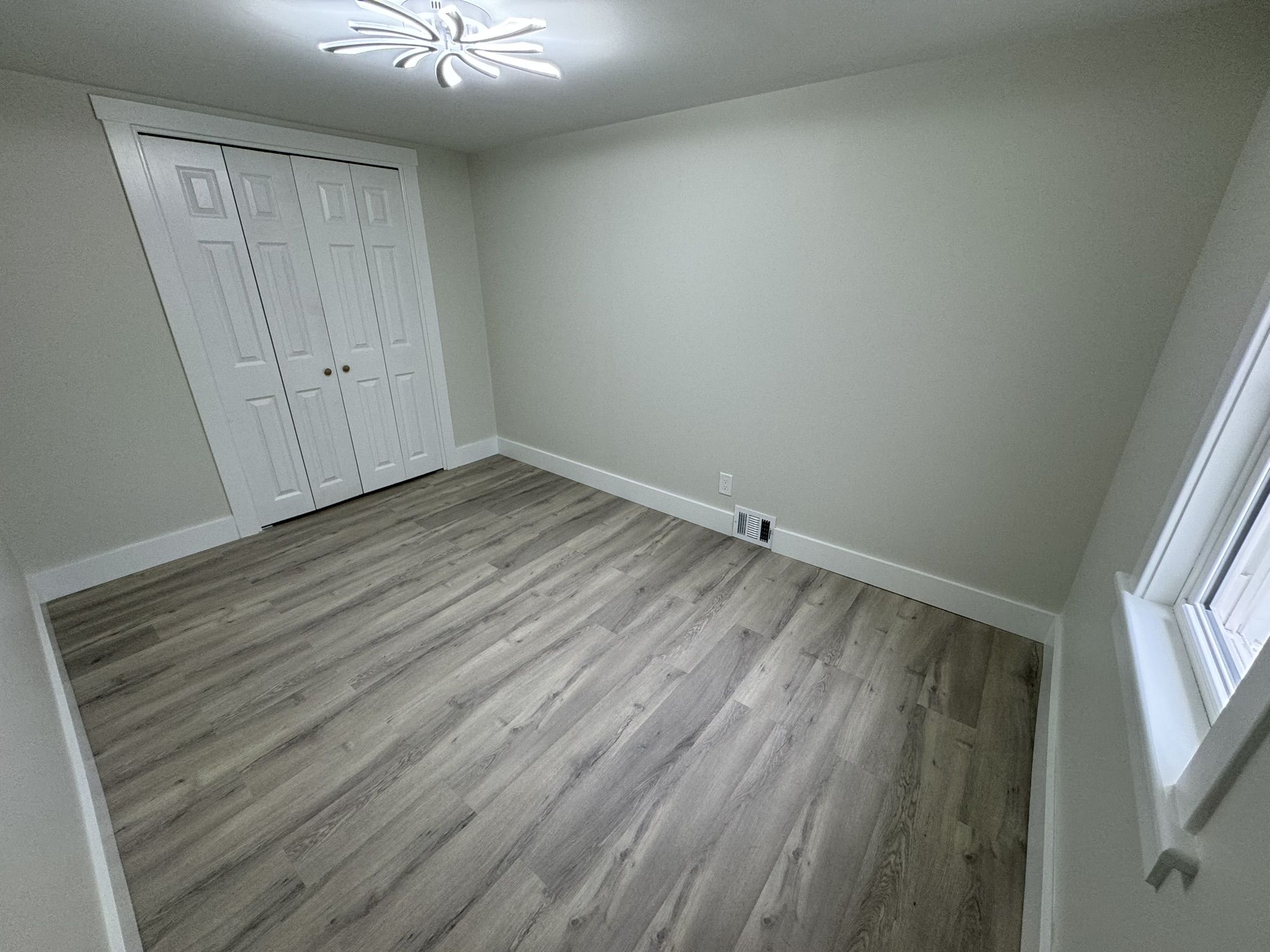
When homeowners across Myerstown, Lebanon, and the surrounding boroughs ask us for one answer, our answer is almost always the same: luxury vinyl plank flooring for Pennsylvania basement projects is the safest, most practical starting point for most homes. Here’s why it wins so often.
- ✓ The wear layer and core are waterproof. Rigid core and WPC (wood plastic composite) LVP products are built to handle standing water for short periods without swelling, warping, or delaminating the way wood-based products do.
- ✓ It handles humidity swings. Unlike solid hardwood, LVP does not expand and contract with seasonal humidity changes, so it stays flat and tight through humid Pennsylvania summers and dry winters.
- ✓ It’s comfortable and warmer underfoot than tile or bare concrete. Most LVP systems include an attached pad or use a separate underlayment, which adds a layer of insulation and cushion that bare concrete and ceramic tile can’t match.
- ✓ Realistic wood and stone looks. You get the visual warmth of hardwood or the look of natural stone without either material’s vulnerability to moisture.
- ✓ Click-lock installation floats over minor slab imperfections. Most basement slabs are not perfectly flat. Floating LVP systems tolerate small variations better than rigid materials like tile.
What Not to Use in a Basement (Without Real Precautions)
Just as important as what to choose is what to avoid, or at least what to never install without the right prep work underneath it.
| Material | Why It’s Risky Below Grade |
|---|---|
| Solid hardwood | Swells, cups, and warps with moisture. Not rated for below-grade installation by most manufacturers. |
| Carpet with no vapor barrier | Traps moisture against the subfloor, which encourages mold and mildew growth you often can’t see until it smells. |
| Laminate flooring | The core is wood fiber, so standing water or chronic dampness causes swelling at the seams. |
| Unsealed or untested concrete | Fine as a floor on its own if properly sealed, but any flooring installed over it without a moisture test is a gamble. |
None of these materials are automatically off the table forever. Carpet, for example, can work in a basement that has been properly waterproofed and tested, paired with a real moisture barrier underneath. The point is that basements demand precautions that upstairs rooms simply don’t need.
Other Viable Basement Flooring Options
LVP is the default recommendation for most basements, but it’s not the only option worth considering. Here’s an honest look at the alternatives, including where each one makes sense.
Porcelain and Ceramic Tile
Tile is fully waterproof once properly installed and sealed, and it’s a strong choice for a basement bathroom, laundry area, or a mudroom-style entry off a walkout basement. The tradeoff is that tile is cold and hard underfoot, which matters more in a below-grade room that’s already cooler than the rest of the house. Radiant floor heating under tile is a popular add-on for basement bathrooms and can offset that downside.
Engineered Vinyl Tile (EVT/LVT)
Engineered vinyl tile is a rigid-core cousin of LVP, cut into tile-format pieces instead of planks. It shares LVP’s waterproof core and comfort underfoot, but gives you the visual option of a stone-look tile pattern with grout lines, at a lower cost and easier installation than real tile. It’s a solid middle-ground pick if you want the tile look without tile’s cost or hardness.
Sealed or Stained Concrete
If your slab is in good shape, a sealed or acid-stained concrete floor is the most moisture-proof option available, because there’s no separate flooring layer to trap water underneath. It works well for a home gym, workshop corner, or a more industrial-style rec room. The downsides are a cold, hard surface and a look that doesn’t suit every homeowner’s taste for a family living space.
| Flooring Type | Best For | Main Tradeoff |
|---|---|---|
| Luxury vinyl plank (LVP) | Rec rooms, family rooms, home offices, guest suites | Not repairable if seriously damaged, replace the plank |
| Porcelain/ceramic tile | Basement bathrooms, laundry areas, walkout entries | Cold and hard underfoot without added heating |
| Engineered vinyl tile | Tile look on a tighter budget, game rooms, bars | Fewer premium finish options than real stone or tile |
| Sealed/stained concrete | Home gyms, workshops, industrial-style spaces | Least comfortable underfoot, limited design warmth |
Basement Flooring Cost Per Square Foot
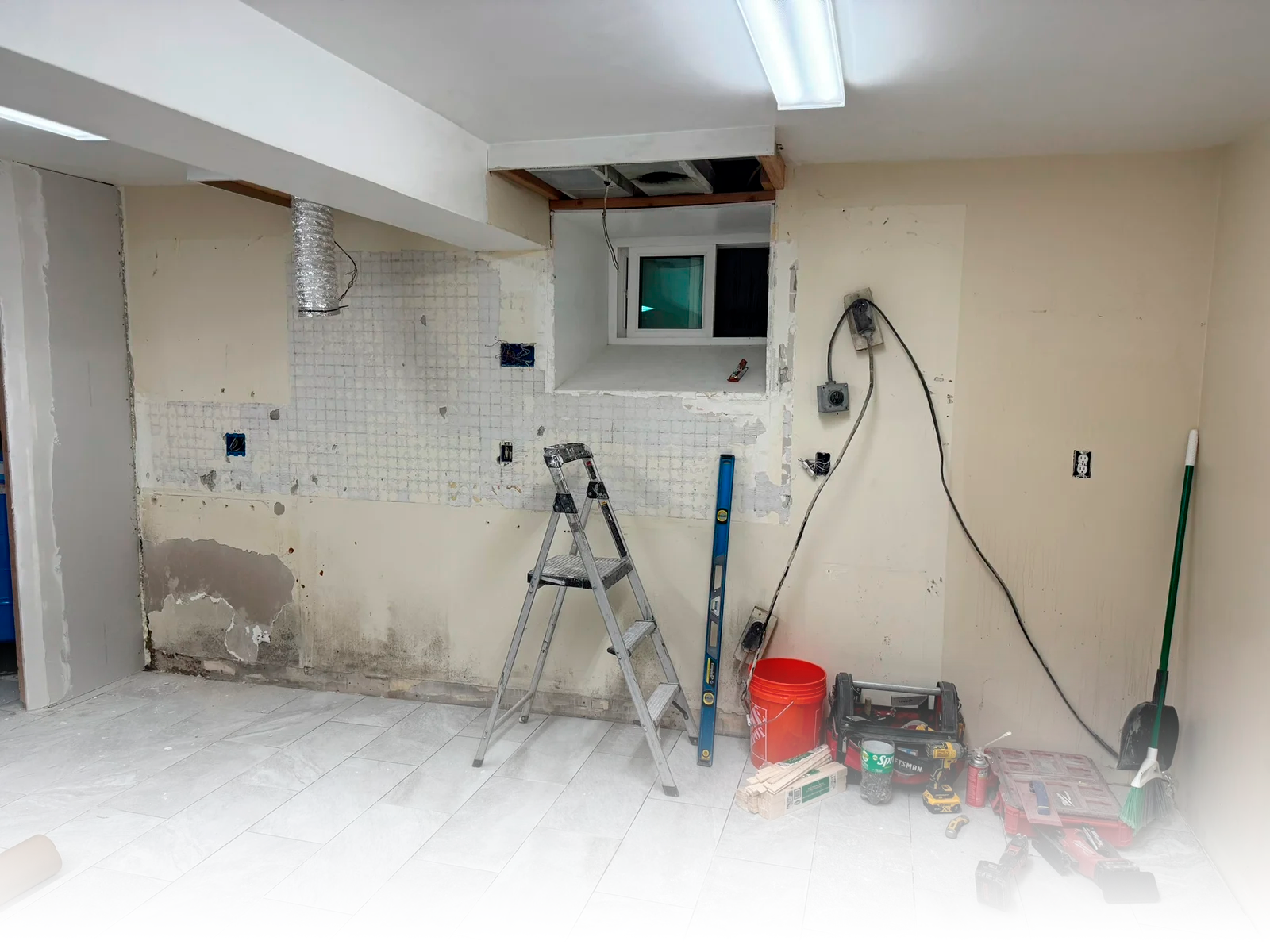
Basement flooring costs follow the same general material pricing as flooring anywhere else in the house, with one addition: basements often need extra prep work like moisture testing, a vapor barrier, or minor slab leveling before the flooring itself goes down. Based on typical regional data from sources like HomeGuide, Angi, and Fixr, here’s what Pennsylvania homeowners generally budget for, fully installed:
| Flooring Type | Typical Cost Per Sq. Ft. (Installed) |
|---|---|
| Luxury vinyl plank (LVP) | $4 – $9 |
| Engineered vinyl tile | $4 – $10 |
| Porcelain/ceramic tile | $7 – $15 |
| Sealed or stained concrete | $3 – $8 |
| Moisture barrier/vapor testing add-on | $1 – $3 per sq. ft., or a flat inspection fee |
These are typical regional ranges for planning, not a quote for your basement. Slab condition, existing moisture issues, and how much subfloor prep your basement needs all move the number. A free in-home estimate is the only way to get a figure specific to your home.
For scale, an 800-square-foot basement (a common size for a mid-range finish, per our basement finishing cost guide) would run roughly $3,200 to $7,200 for LVP flooring alone, before factoring in walls, electrical, or a bathroom. If you’re planning the whole project, not just the floor, that guide walks through the full budget picture room by room.
For flooring cost comparisons outside the basement (kitchens, bathrooms, living rooms), our flooring installation cost guide breaks down hardwood, laminate, and tile pricing for the rest of the house. Consumer Reports’ flooring buying guides are also a solid independent resource if you want to compare specific product lines before you shop.
Installation Considerations: Prep Work Matters More Than the Material
Homeowners often focus on which material to buy, but the truth is that basement flooring failures almost always trace back to skipped prep work, not a bad material choice. Here’s what a proper basement flooring installation should include before a single plank or tile goes down.
- Moisture (vapor) testing. A calcium chloride test or a relative humidity probe test measures how much moisture is actually moving through your slab. This takes the guesswork out of whether you need a vapor barrier at all.
- Crack and joint inspection. Small slab cracks should be sealed before flooring goes down, since they’re a common path for water and radon to enter the room.
- Vapor barrier installation. A polyethylene sheet or a purpose-built underlayment with a built-in vapor barrier goes between the slab and the flooring. This step is what actually protects LVP, EVT, or any floating floor from long-term slab moisture.
- Subfloor leveling. Basement slabs are rarely perfectly flat. Low spots and high spots both need to be addressed, or you’ll see them telegraph through the new flooring later.
- Sump pump and drainage check. If your basement doesn’t already have reliable drainage or a working sump pump, that’s a conversation to have before flooring, not after a flood ruins a brand-new floor.
Skipping the moisture test to save a little time is the single most common mistake we see in basement flooring failures. It’s also the easiest one to avoid.
This is also where basement flooring connects to the rest of your project. Insulating and sealing basement walls before finishing reduces the moisture load on the whole room, which is one reason the ENERGY STAR program treats basement air sealing and insulation as a package deal with moisture control rather than two separate projects. If you’re planning walls and insulation alongside your new floor, our basement finishing services cover the full scope, not just flooring.
Questions to Ask Before You Hire a Basement Flooring Contractor
- ✓ Will you test the slab for moisture before installing anything? If the answer is no, keep asking questions.
- ✓ What vapor barrier or underlayment system do you use? A specific product answer is a good sign. A vague answer is not.
- ✓ Is the flooring rated for below-grade or basement installation? Not every LVP or laminate product on the shelf is rated for basements. Manufacturer specs matter here.
- ✓ Are you licensed and insured in Pennsylvania? You can confirm any contractor’s status through the Pennsylvania Attorney General’s Home Improvement Consumer Protection Act registry before signing anything. Our own guide to hiring a licensed home improvement contractor covers what else to check before you sign.
Working with an organization like the National Association of the Remodeling Industry (NARI) member network, or simply asking your contractor for references from past basement projects, gives you another way to verify you’re hiring someone who understands below-grade work specifically, not just flooring in general.
Basement Flooring FAQ: Lebanon County, PA
What is the best flooring for a basement overall?
For most Lebanon County basements, waterproof luxury vinyl plank is the best all-around choice. It handles humidity and occasional moisture, feels warmer underfoot than tile or concrete, and costs less than tile in most cases. Tile is a strong second choice, especially for a basement bathroom or laundry area.
Can you put carpet in a basement?
Yes, but only with the right precautions. Carpet in a basement needs a tested, moisture-free slab, a real vapor barrier underneath, and ideally a moisture-resistant carpet pad. Skipping any of these steps raises the risk of mold and mildew, which is why we don’t recommend carpet as a default basement choice without that prep work in place.
Can I install hardwood flooring in a basement?
Solid hardwood is not recommended below grade. It absorbs moisture from the slab and can cup, warp, or buckle over time, even in a basement that seems dry. If you want a genuine wood look, engineered hardwood with a basement-rated moisture barrier is a safer alternative, though LVP still outperforms it for pure waterproofing.
Do I really need a vapor barrier under basement flooring?
In almost every case, yes. Even basements with no visible moisture problems can push water vapor through the slab over time. A vapor barrier is inexpensive compared to replacing failed flooring, and skipping it is one of the most common causes of basement flooring problems we see.
How much does basement flooring cost in Lebanon County, PA?
Most basement flooring projects run between $4 and $15 per square foot installed, depending on material, with LVP on the lower end and tile on the higher end. Moisture testing and vapor barrier installation add a smaller amount on top. A free in-home estimate gives you an exact number for your basement.
Why Choose Amazing Builders
We’re a licensed and insured, family-owned remodeling company based in Myerstown, PA, serving Lebanon County, Lancaster, Reading, York, Harrisburg, Philadelphia, and Allentown. Every basement flooring job starts with a real moisture assessment, not a guess, because a beautiful floor that fails in a year isn’t a good value at any price.
- ✓ Moisture testing before every basement flooring install. We don’t guess about vapor conditions, we test for them.
- ✓ Basement-rated materials only. We only recommend products actually rated for below-grade installation.
- ✓ Transparent, itemized quotes. You’ll know your real cost, including any prep work, before we start.
- ✓ Full-scope basement experience. If you need more than flooring, our basement finishing team can handle walls, electrical, and layout too. Our flooring and tile installation team handles the rest of the house as well.
📍 Service Areas: Myerstown • Lebanon • Lancaster • Reading • York • Philadelphia • Harrisburg • Allentown
📞 Call us at (267) 917-3986 or request your free basement flooring estimate online today. Learn more about our team or browse our full remodeling services.
Still deciding on the bigger picture? Take a look at our project gallery for finished basement examples, or read more about planning your full remodeling budget before you commit to a scope.
The right basement floor starts below the surface, with a moisture test, not a material swatch. Let’s start there.